The age of maritime gigantism is facing an elegant, quiet rebellion. For the modern high-net-worth traveler, the true measure of an extraordinary voyage is no longer how much a ship can contain, but what it can help us access. In an era where the cruise industry has largely focused on building massive, multi-thousand-passenger floating cities, a sophisticated counter-movement has emerged. Today, June 22, 2026, Azamara Cruises officially signaled this shift by launching its bold new global brand campaign, “The Next Big Thing Is Small™.” This campaign is more than a creative marketing pivot; it is a profound declaration that the future of premium travel is defined not by scale, but by intimacy, authenticity, and unmatched geographical access.
For the discerning traveler, this represents a welcome return to first principles. The ultimate definition of luxury travel has evolved. It is no longer about the ostentatious display of massive onboard water parks, cavernous theaters, or towering shopping malls. Instead, it is centered on the scarcity of three precious elements: space, silence, and time. When we analyze modern travel through a first-principles lens, we discover that the most memorable experiences are fundamentally personal, quiet, and deeply connected to the destination. While mass-market operators rely on standardized, high-volume attractions, small-ship travel stands as a testament to strategic craftsmanship. It rejects the “auto-pilot marketer” reliance on superficial scale, choosing instead to focus on the quiet luxury of curated discovery and genuine cultural enrichment.
This paradigm shift is driven by what we can call the strategic alchemy of scarcity. In business and travel design, physical constraints are rarely obstacles; rather, they are the very engines of tomorrow’s competitive advantage. A small ship—carrying fewer than a few hundred guests—is physically prohibited from entering the high-volume commodity market. However, this exact limitation is what unlocks its peerless value. Because of their modest dimensions and shallow drafts, small vessels can slip effortlessly into remote, shallow bays, navigate narrow rivers, and dock directly in the heart of historic destination centers.
Consider the difference in experience. While a 6,000-passenger megaship must anchor miles away in a sterile, commercial container terminal—forcing its guests to endure long tender lines and crowded coach transfers—an agile, small-scale vessel can sail directly into the mountainous bay of Pasaia in Spain, tie up along the historic Guadalquivir River in Seville, or dock at the quiet municipal pier of a secluded Greek island. The physical scarcity of shipboard capacity is the exact catalyst that produces an abundance of local connection. By prioritizing small-scale hardware, operators can offer their guests late-night and overnight stays in ports of call, allowing them to experience a city after the daytime tourist crowds have departed. This “night tourism” turns a standard port visit into a magical, unhurried exploration of local gastronomy, evening arts, and nightlife.
Furthermore, we must recognize the cumulative effect of mega-ship congestion on global tourism. Over the past decade, the rapid, unchecked growth of high-occupancy ocean liners has led to severe overcrowding in the world’s most delicate and iconic ports. Historic sanctuaries like Venice, Santorini, and Mykonos have been forced to implement strict passenger caps, high daily entry fees, and tender limits to protect their fragile infrastructures. The cumulative result of this overcrowding is a dramatic dilution of the luxury experience. For high-net-worth travelers, the charm of visiting a historic Mediterranean island is entirely lost when shared with ten thousand other tourists.
In response, the small ship has emerged as a true sanctuary of exclusivity. It serves as a private, elegant key that unlocks alternative, untouched geographies. Rather than competing for space in congested tourist hubs, small vessels can chart highly creative itineraries to under-the-radar destinations—such as the pristine fjords of northern Iceland, the quiet harbor towns of Japan’s Miyazaki and Ishigaki, or the remote, secluded islands of the South Pacific. This shifts the core value proposition of a voyage from simple geographical transit to highly curated, low-impact exploration. By treading lightly on the local environment and engaging respectfully with host communities, small-ship cruising represents a genuine form of environmental and cultural stewardship.
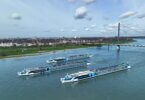
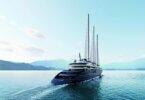
To see this philosophy in action, we only need to look at how leading niche brands are rewriting the rules of seasonal travel and vessel scale. For instance, TUI River Cruises has just announced today, June 22, 2026, its largest winter river program ever, doubling down on the Rhine and the Douro. By keeping riverboats active during the serene winter months, they are transforming what was once considered an off-season constraint into a highly exclusive, romantic travel window. Similarly, the newly unveiled Velarca concept has introduced an ultra-private, 32-guest sailing expedition yacht specifically designed to target the ultra-high-net-worth market. Operating with hybrid wind-and-solar propulsion, this micro-yacht represents the absolute pinnacle of low-impact, high-exclusivity ocean travel. These developments prove that the industry’s leaders are no longer chasing volume; they are chasing the exquisite, quiet margins of deep personalization.
We are also witnessing the entrance of world-renowned luxury hospitality icons into this intimate marine space. The launch of the Ritz-Carlton Yacht Collection, with its stunning new superyachts, has proved that five-star hotel design and service can be seamlessly translated to the ocean. Now, other legendary names are preparing to make their maiden voyages. Four Seasons Yachts is scheduled to debut its ultra-luxurious, low-density yacht next year, while the iconic Orient Express Sailing Yachts will launch the Orient Express Corinthian, a breathtaking 110-passenger tall ship operating under high-tech, hybrid sail-power.
These incoming maritime icons are not merely building ships; they are redefining the architectural and experiential standards of luxury at sea. They are introducing a residential design language—characterized by sprawling suites, private plunge pools, and open-air decks—that completely rejects the dense, highly commercial layout of traditional cruise liners. By maintaining an exceptionally high crew-to-guest ratio and limiting capacity to a fraction of standard ships, they ensure that every interaction is highly personalized and intuitive. This is the ultimate expression of modern premium travel: a seamless continuation of the world’s finest land-based boutique hotels, floating elegantly across the globe.
Ultimately, the future of high-end travel belongs to those who understand that the most profound journeys are those that prioritize depth over breadth. The small-ship renaissance is not a temporary trend or a compromise of capacity; it is a permanent, structural realignment of traveler desires. It proves that the ultimate luxury is not found in the grand, manufactured spectacles of giant ships, but in the quiet, authentic, and exclusive moments that can only be unlocked by staying small.
For the subscribers of the Voyages Network, this shift represents an exciting invitation to re-imagine the art of the journey. As the industry continues to bifurcate between mass-market entertainment and bespoke destination immersion, the choice for the discerning traveler has never been clearer. It is a choice to step away from the crowds, to embrace the quiet allure of the water, and to discover that the most extraordinary, life-changing adventures are always the ones that are personal, intimate, and beautifully small.